경복궁의 서쪽, 인왕산 일대는 안평대군의 자취가 곳곳에 스며 있어 역사를 기억하며 거닐어 보는 의미가 있는 곳이다. 세종대왕의 셋째 아들이며 예술과 문학을 사랑했던 안평대군은, 차남인 수양대군(세조)의 계유정난으로 사약을 먹고 죽임을 당한다. 세조 이후로는 안평대군의 사적을 지우다보니 시신도 무덤도 남아 있지 않다. 그가 평생을 수집한 문화재는 모두 뿔뿔이 흩어져 사라져 버렸고 역사에 흔적만 있을 뿐이다.
독립문역에서 경복궁역까지 이렇게 걸어보면 어떨까요
경복궁의 서쪽, 인왕산 일대는 안평대군의 자취가 곳곳에 스며 있어 역사를 기억하며 거닐어 보는 의미가 있는 곳이다. 세종대왕의 셋째 아들이며 예술과 문학을 사랑했던 안평대군은, 차남인
www.ohmynews.com
특히나 현재 일본에 소장되어 있는 몽유도원도는 안평대군이 꿈 속에서 거닐었다는 무릉도원을 안견이 3일 동안 그려낸 예술 작품이다. 그 후에 안평대군이 인왕산 기슭을 돌아보다가 꿈에서 본 풍경과 똑같다고 하여 무계정사라는 집을 짓고 자주 찾았다고 한다. 또한 수성동 계곡에는 자신의 호(비해당)를 딴 별장을 짓고 시와 그림을 그렸다고 전해진다.
이 역사의 자취를 따라 걸어보는 길이 가치가 있다 할 것이다.
The Lost Prince and the Mountain of Spirits: Inwangsan Walk
The Western Shadow of Gyeongbokgung: Walking Inwangsan
West of Gyeongbok-gung rises Inwangsan, a mountain where the traces of Prince Anpyoung linger like faint ink upon old paper. The third son of King Sejong—lover of poetry, painting, and the dream of beauty—was condemned to death by poison at the hands of his brother, Prince Suyang, who seized the throne as King Sejo. No tomb, no body, no sanctuary of remembrance remains. His treasures were scattered, his house of dreams erased, yet his spirit still seems to wander here.
map of Inwangsan
One vision survives. In a dream, Anpyoung beheld a paradise of streams, peaks, and pines. The painter An-Gyeon captured it in three days: the Dream Journey to the Peach Blossom Land (Mongyudowondo), now housed in Japan. When the Prince walked the slopes of Inwangsan, he recognized the same dreamscape and built a retreat he called Mu-gye Pavilion.
By the clear stream of Susung Valley, he raised another villa, writing poems and painting amid the whisper of water and wind. To walk here today is to step through layers of time. Begin at Independence Gate and follow the trail past Inwangsa Temple and the shamanic shrine of Guuksadang, where gods of kings and warriors share space with the chants of moodang.
https://omn.kr/27a7a
Here, Buddhism and shamanism intertwine— bells, murals, steep stairways, and the lingering smell of incense. A strange coexistence, yet it is our people’s way: weaving the different into a single fabric.
오히려 길치여서 쓸 수 있었던 서울 산책길 이야기
이 책으로 켜켜이 쌓인 역사의 한 층을 벗겨내었다고 생각합니다. 한국의 수도 서울에는 한민족의 모든 행위와 인프라가 흥 멸하면서 생긴 역사가 겹겹이 지층을 덮고 있습니다. 한 걸음 내디디
www.ohmynews.com
Inwangsan
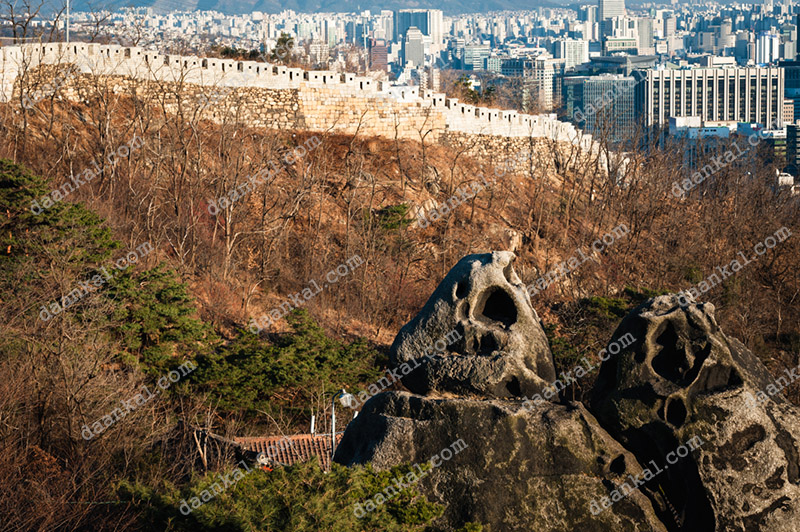
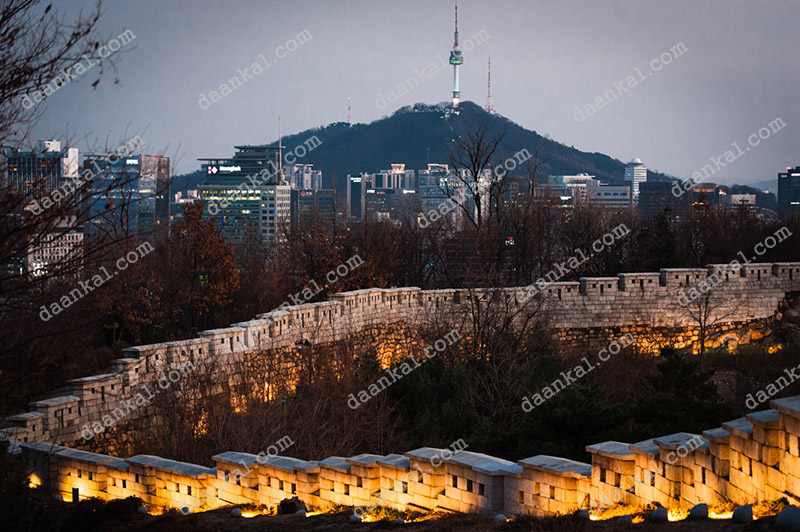
Above the shrine stands Sunbawi, the Meditation Rock, a granite figure robed like a monk, gazing silently toward the city. Around its base, offerings of rice, candles, and chickens appear, left by worshippers. Climb further and the stone wall of the old fortress greets you; by dusk its lanterns glow, and below, Seoul’s lights shimmer like spilled stars.
From the summit the view is wide and commanding. Bukhansan rises in the north like a painted screen, flanked by Ansan and Buukaksan. Beyond Gyeongbokgung, the blue tiles of the presidential palace shine. To the south, Namsan Tower pierces the horizon, with Gwanaksan crouching like a guardian.

Inwangsans Sunbawii
Follow the fortress wall downward and you reach Susung Valley again, where water sings through rock. From here the path leads past Baehwa Women’s University, the old archery pavilion Hwanghakjung, and finally to Sajikdaan—the altars of earth and grain, the sacred heart of a dynasty.
Inwangsan is not a high mountain—barely 340 meters— but its presence is immense. It is the White Tiger of Seoul, guardian of the western flank, paired with Buukaksan to the north, Naksan to the east, and Namsan to the south. Here Jung Do-jeon and the monk Muuhak once debated which peak should be the capital’s main guardian. Here the painter Jung Sun saw storm and light sweep across granite, birthing his Inwang Jesaekdo.

Sajikdaan
To climb Inwangsan is not merely to hike a hill. It is to walk into a dream half-remembered, half-erased; to touch the ghost of a lost prince; to listen to the city’s soul beating within stone and water.
'Human Life - 인생이란 > Trip' 카테고리의 다른 글
| 궁녀 환관의 애환이 녹아 있는 초안산 비석골에서 북서울꿈의숲 (0) | 2025.08.22 |
|---|---|
| 서울 산책기: 동대문을 한바퀴 돌아 석굴암을 재현한 보문사까지 (0) | 2025.08.22 |
| 연세대 거쳐 황금 고릴라가 지키는 돈의문 안산 탐방 (0) | 2025.08.21 |
| 아차산 벚꽃길 무료 셔틀버스 타고 가자 (0) | 2025.08.21 |
| 원불교 소태산 흑석동에서 탁 트인 한강 풍경 (0) | 2025.08.19 |


